
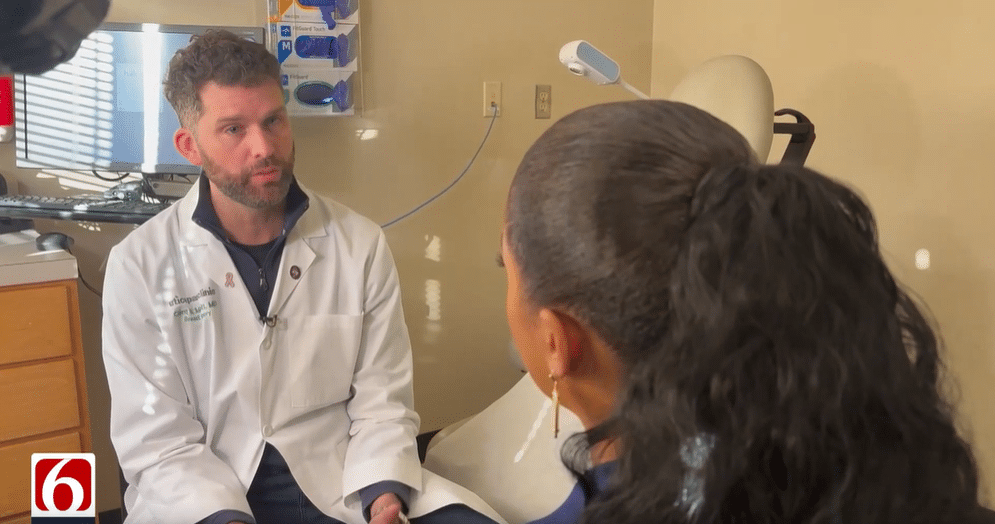
October is Breast Cancer Awareness Month, a time when many conversations focus on women’s risk and the importance of mammograms. But men can develop breast cancer, too, and doctors say a lack of awareness can cause some to overlook symptoms or delay seeking medical care.
What are the warning signs of breast cancer in men?
Symptoms can include a lump near or behind the nipple, nipple pain, bloody discharge and changes to the skin. The affected area may also become itchy, red or inflamed. Merritt says some men mistake these symptoms for a rash, insect bite or bruise and may not realize breast cancer is a possibility.
Because men have less breast tissue than women, the disease is much less common. However, men still have breast tissue and can develop cancer in that area. Merritt says men should seek medical attention if they notice unusual changes rather than assuming the problem is harmless.
Why might men delay seeking medical care?
Merritt says a lack of awareness is one reason men may not recognize the symptoms of breast cancer. He said some patients are surprised when they receive a diagnosis because they do not realize men can develop the disease. Others may feel embarrassed discussing symptoms involving their chest or nipples.
That lack of awareness can delay diagnosis, Merritt said. When breast cancer is not detected early, it may spread to nearby lymph nodes or other parts of the body. Early-stage breast cancer may be confined to the breast, while more advanced disease can involve lymph nodes under the arm or spread to organs such as the bones, lungs or liver.
Merritt encourages men to seek medical advice if they notice a concerning change, even if they are unsure whether it is serious.
Does breast cancer in men run in families?
Genetics can play a role in male breast cancer. Merritt says the disease can be associated with inherited gene mutations, although not every man diagnosed with breast cancer has one. He recommends genetic testing for men diagnosed with breast cancer to help determine whether an inherited mutation may be involved.
Certain gene mutations can be passed from parents to children, including sons and daughters. Identifying a mutation may help doctors and genetic counselors determine which relatives could also be at increased risk.
Merritt says families should share information about a male relative’s breast cancer diagnosis and consider speaking with a qualified genetic counselor about whether testing is appropriate.
What should men do if they notice a change?
Merritt advises men not to ignore unusual lumps, nipple discharge, pain or changes in the skin around the chest. Even if a symptom appears minor, a health care provider can evaluate it and determine whether additional testing is needed.
He says seeking medical advice early is important because symptoms cannot be reliably identified as harmless without an appropriate evaluation.
What should women know about breast cancer screening?
Merritt also encourages women to stay current with recommended breast cancer screenings. Women at average risk are generally advised to begin mammograms at age 40. Women who have been told they have dense breast tissue should discuss their screening options with their health care provider.
Merritt says 3D mammography, also known as digital breast tomosynthesis, may help doctors evaluate dense breast tissue. In some cases, additional imaging may be appropriate depending on a patient’s individual risk and medical history.
He encourages patients to discuss their screening needs with their health care providers and to seek advice if they notice changes, even if they recently had a normal screening.
What is the most important message for men?
Merritt says men should understand that breast cancer is not limited to women and that embarrassment should not prevent them from seeking medical care.
Recognizing symptoms, getting concerning changes checked and following medical recommendations can help men take action sooner. For those diagnosed with breast cancer, genetic testing may also provide important information about potential risks for their families.
This story was written by KOTV’s MaKayla Glenn. You can view the full story online here.